Japanese Tattoo Design Guide — Irezumi Art, History & Ideas
Recent Japanese inspiration
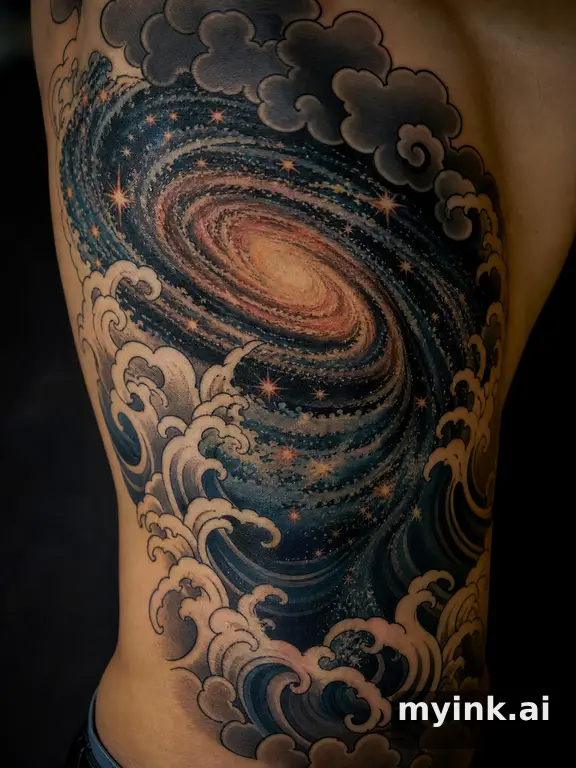
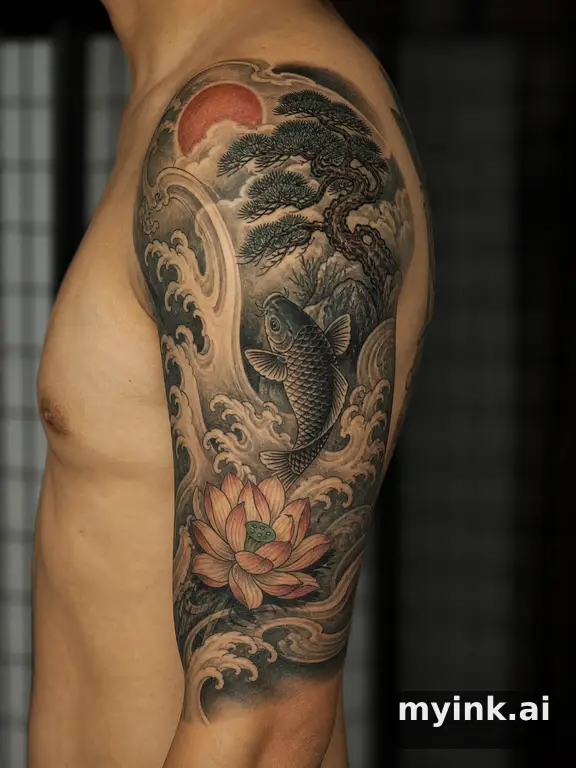
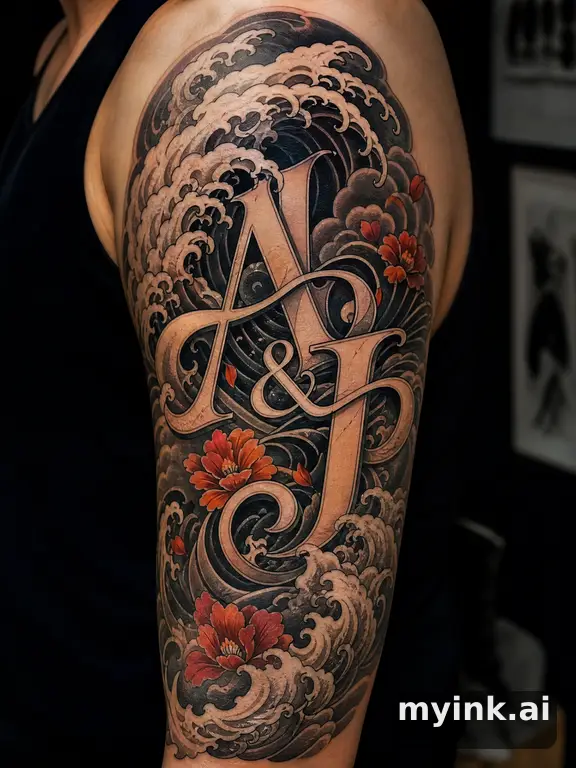
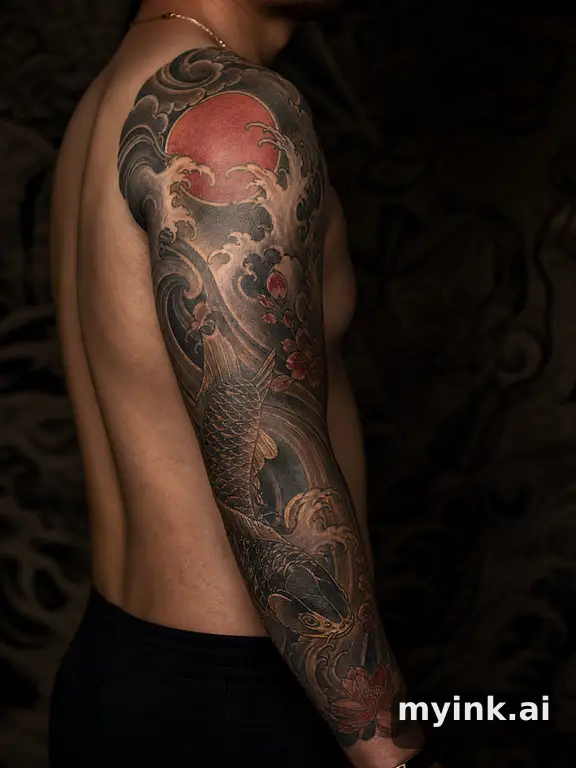
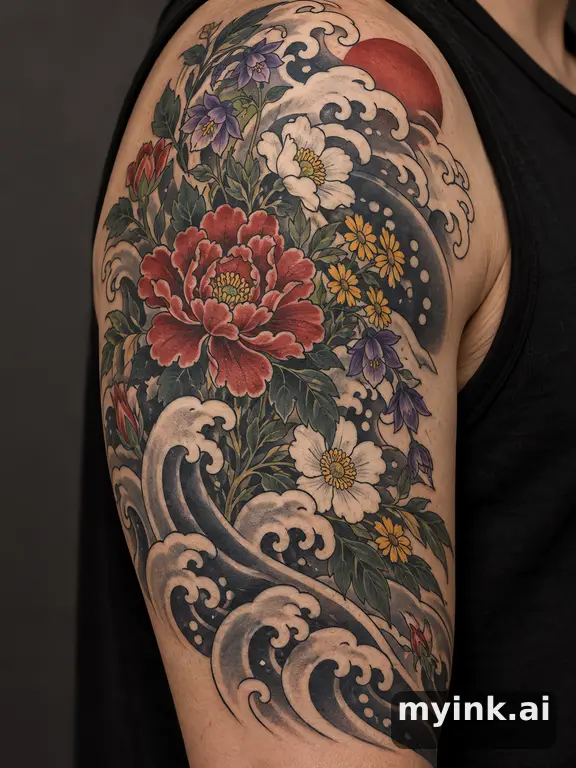
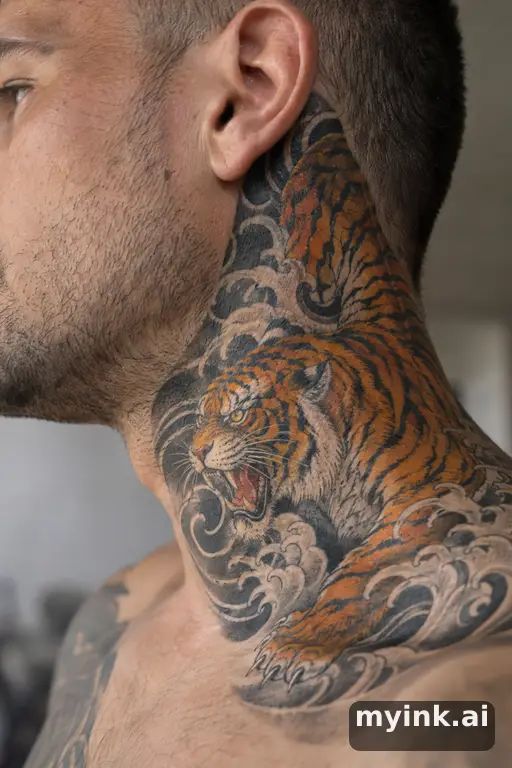
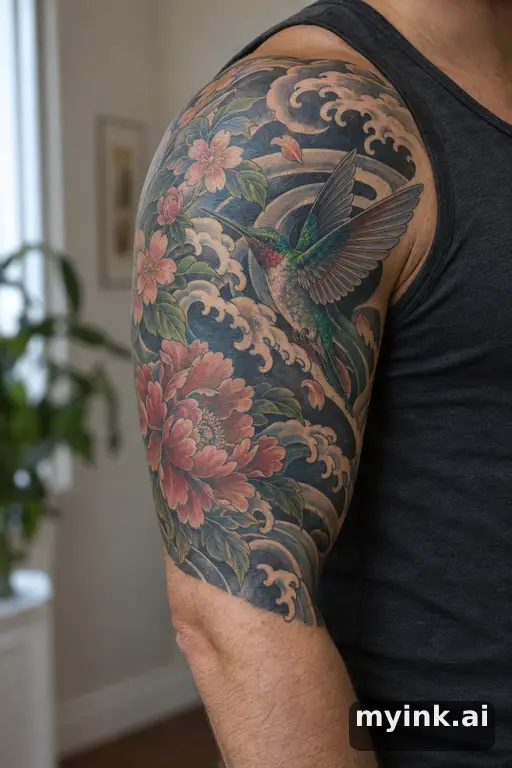
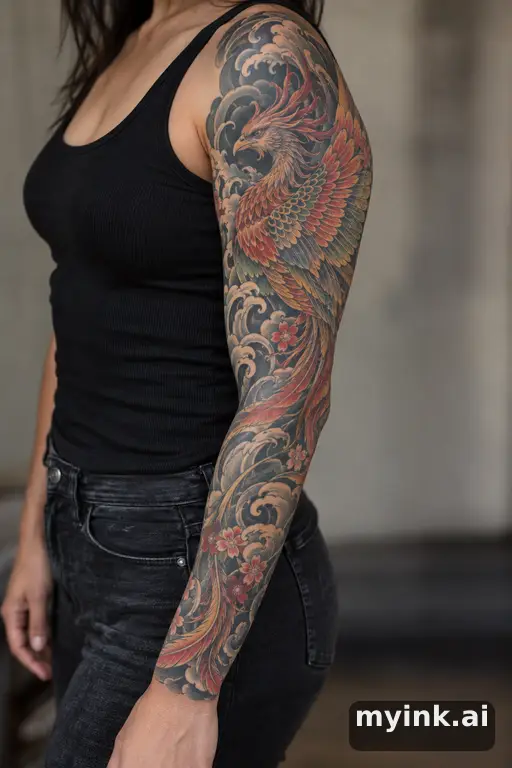
AIAI-generated inspiration, not customer tattoos · open any design for a closer look
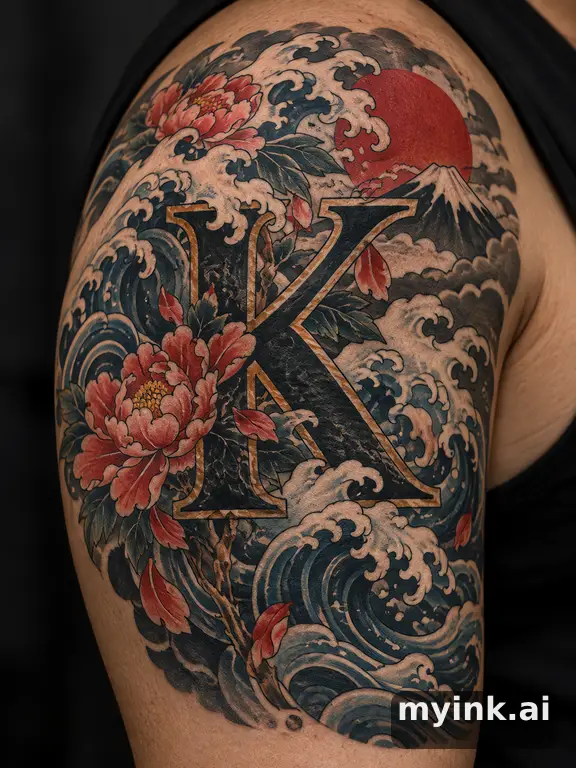
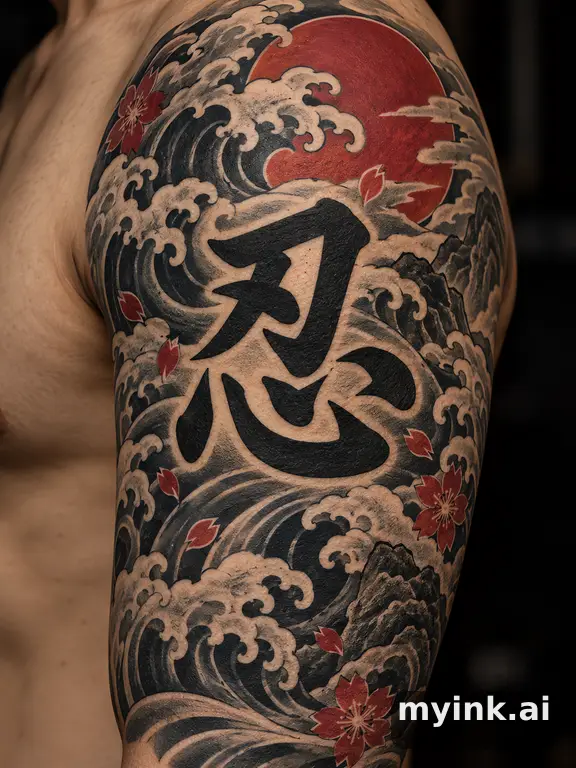
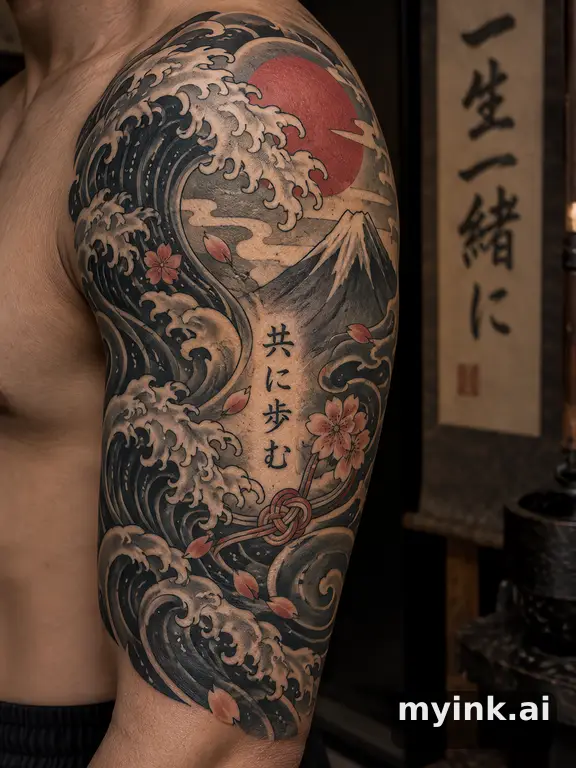
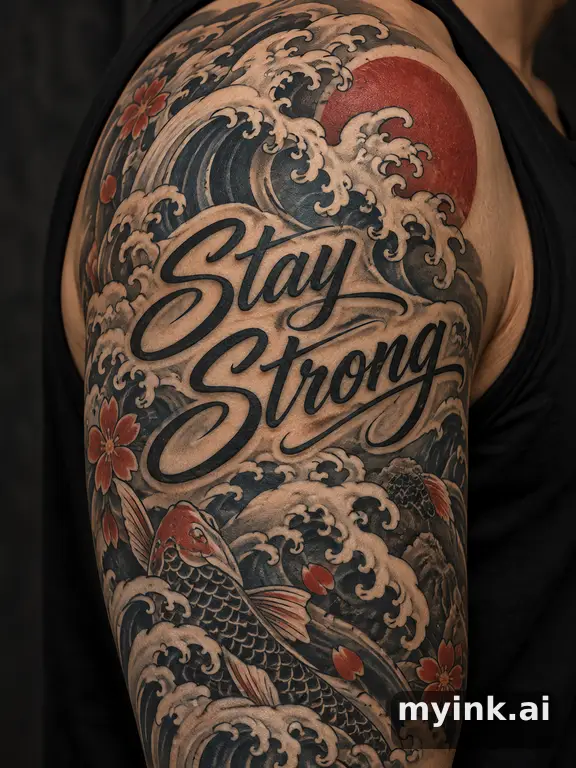
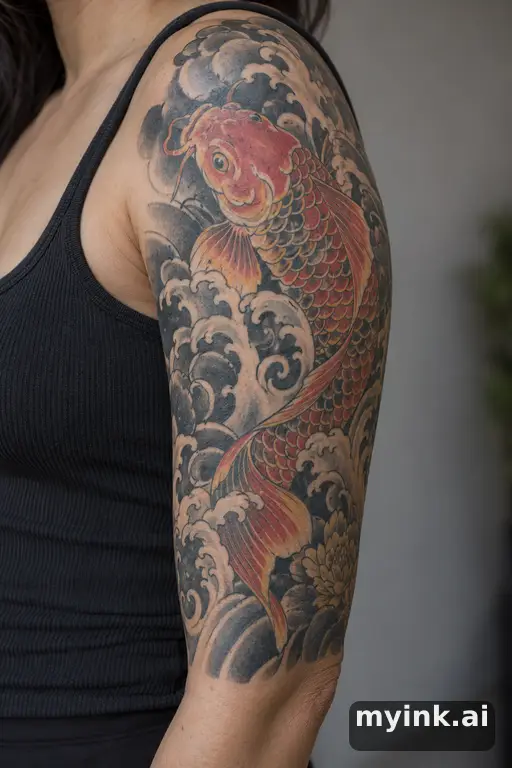
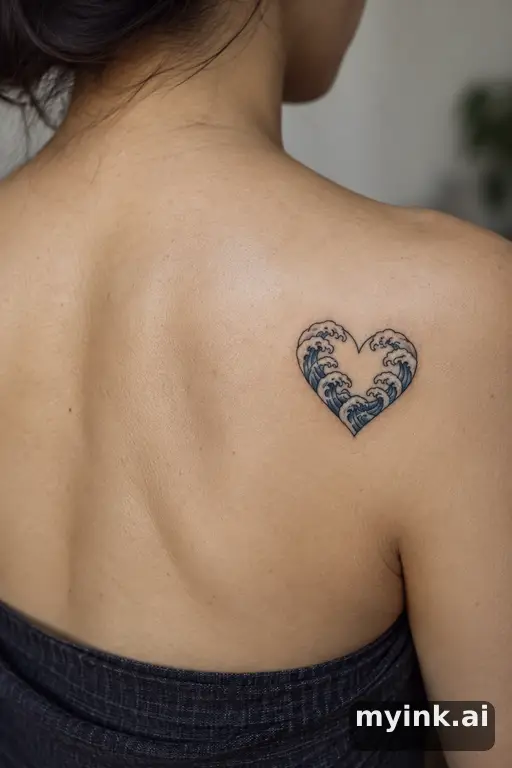
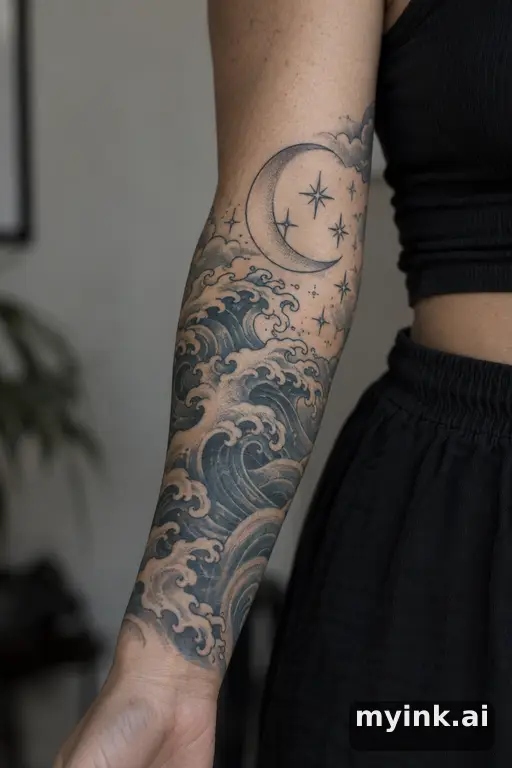
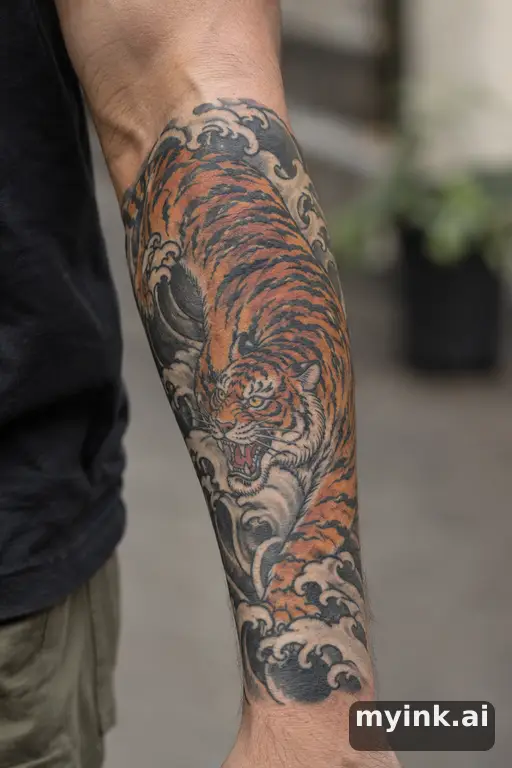
Opening is free · 4 directions use 4 credits · try-on 1 credit
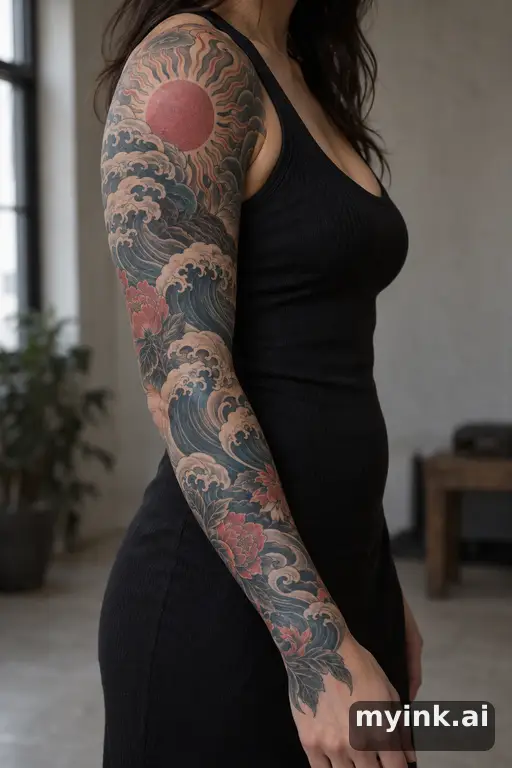
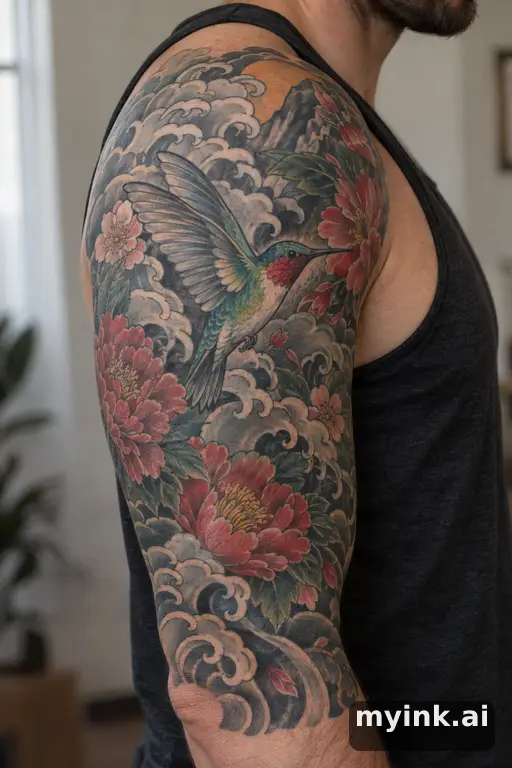
View all inspiration →Japanese tattoo style, known traditionally as irezumi, represents one of the oldest and most codified tattoo traditions in the world, with a visual vocabulary refined over centuries of craft. Characterized by bold outlines, rich color palettes anchored in red, black, and blue-green, swirling water and wind motifs, and iconic subjects like dragons, koi fish, peonies, and samurai, the style carries narrative depth that few other genres match. Rooted in the Edo period, irezumi evolved from social stigma into international high art, with Western collectors traveling to Japan specifically to receive work from masters like Horiyoshi III. Contemporary Japanese tattoo blends traditional principles with modern techniques, allowing for larger, more anatomically aware compositions that flow with the body's muscle groups rather than fighting them. A well-executed Japanese sleeve or back piece is considered one of tattooing's highest achievements. Use the MyInk AI generator to explore Japanese motif combinations before booking a multi-session commitment.
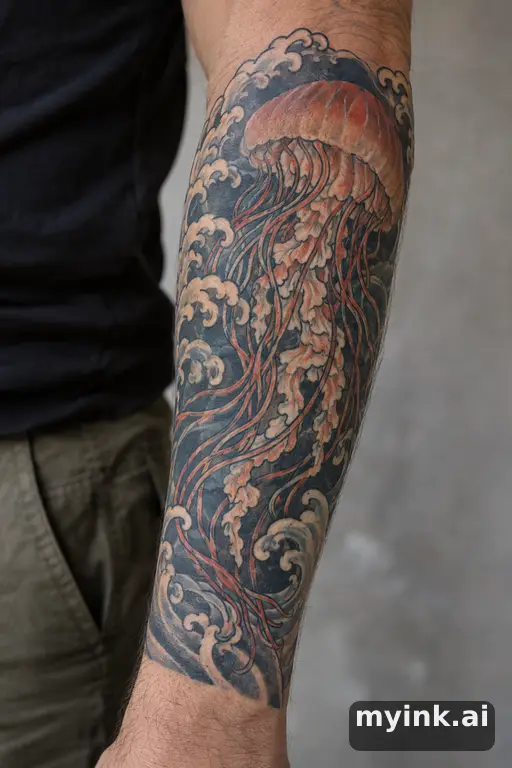
Japanese forearm tattoos
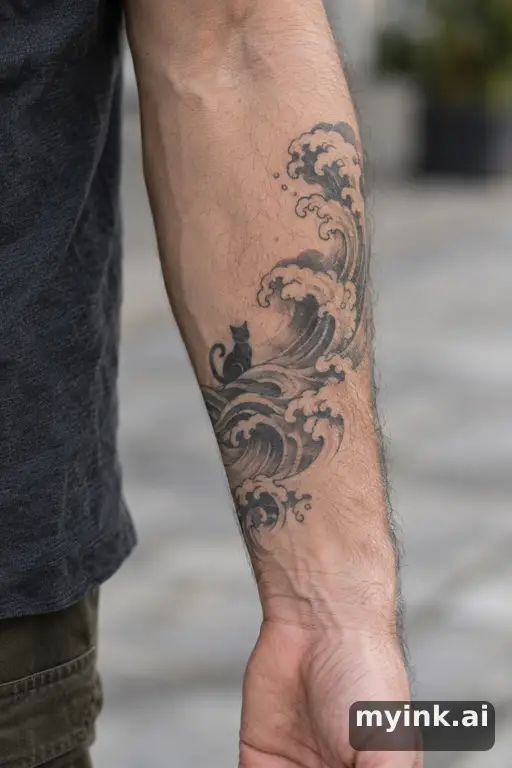
4 of the 24 designs in this gallery are placed on the forearm; subjects include cat, jellyfish and moon.
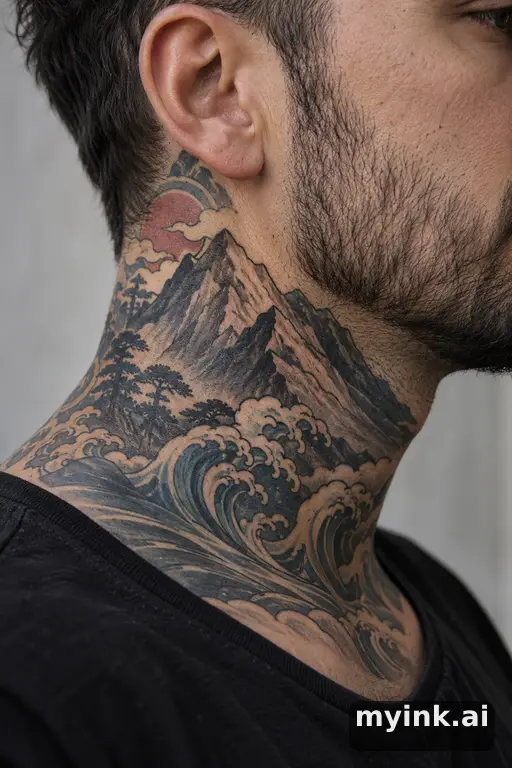
Browse Forearm Tattoo Ideas →Mountain tattoos in Japanese style
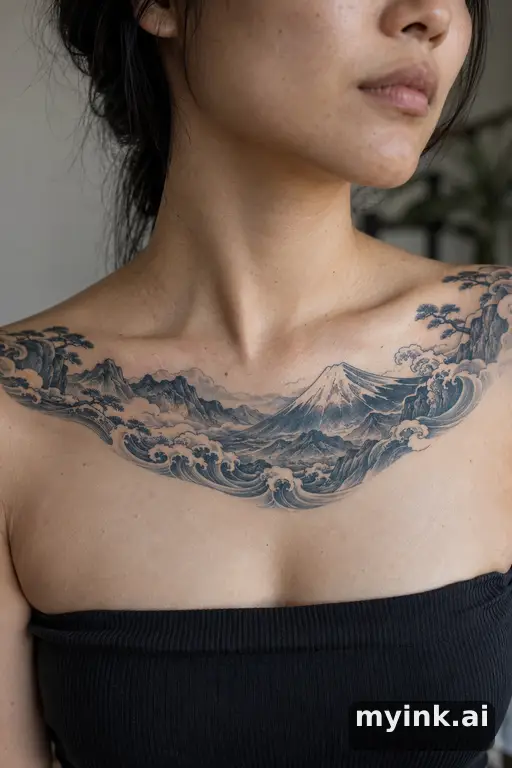
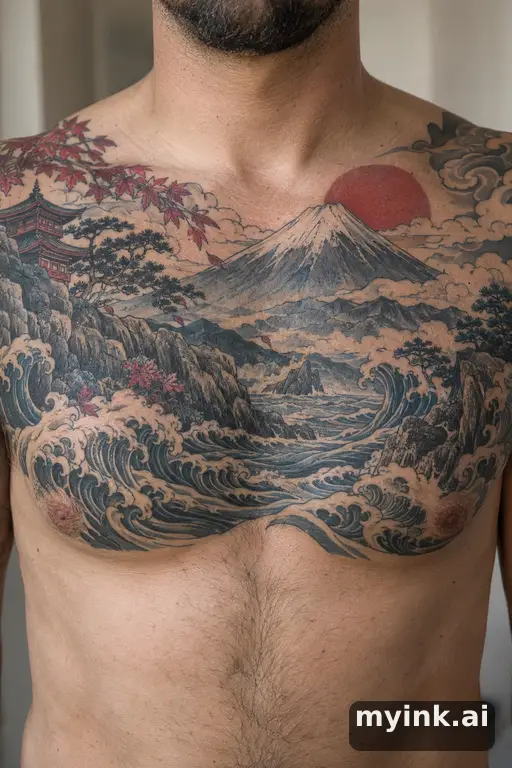
4 of the 24 designs in this gallery are mountain designs, most often on the chest and on the collarbone.
Generate a Japanese Tattoo
Open the studio with Japanese pre-selected, describe what it means to you, and generate a 4-image design set.
Open the studioHistory and Origins of Japanese Tattooing
Irezumi has roots stretching back over a thousand years, though its modern form crystallized during Japan's Edo period through a remarkable convergence of woodblock printing, criminal branding, and decorative fashion.
Ancient Roots and the Edo Period
Japanese tattooing likely predates written records, but the Edo period (1603-1868) gave rise to the visual style recognized today. Ukiyo-e woodblock print aesthetics — bold outlines, flat color areas, and dramatic natural imagery — directly shaped tattooing conventions. Firefighters, laborers, and merchant-class men adopted full-body tattoos as symbols of courage and group identity.
Criminalization and Underground Continuity
The Meiji government banned tattooing in 1868 as Japan sought to modernize its international image. Tattooing went underground but continued serving foreign visitors and maritime communities. This period of prohibition paradoxically preserved traditional techniques outside state influence, allowing irezumi to develop on its own terms until the ban lifted in 1948.
Master Artists and the Hori Lineage
Japanese tattooing is organized around master-apprentice lineages, with artists taking honorific names like Horiyoshi (Mountain of the Hori). Figures like Horiyoshi III became internationally recognized, training students and documenting traditional designs. This lineage system preserves technique and imagery across generations in ways rare in Western tattooing.
Western Adoption and Neo-Japanese Style
Western tattooers in the 1980s and 1990s began adapting Japanese motifs, eventually creating Neo-Japanese style — a fusion retaining bold outlines and iconography but incorporating Western shading, color, and compositional flexibility. This hybrid style now dominates the international tattoo market while traditional irezumi practitioners continue their distinct tradition.
Key Characteristics and Popular Japanese Designs
Japanese tattoo designs follow a consistent visual grammar that experienced collectors learn to read as readily as written language.
Dragons, Koi, and Iconic Creatures
Japanese dragons represent wisdom, strength, and water — they spiral dynamically through compositions rather than sitting static. Koi fish, especially ascending against waves or waterfalls, symbolize perseverance and transformation. Tigers represent earth and autumn, while phoenixes represent rebirth and fire. These creatures are rarely decorative; each carries specific symbolic weight.
Floral Motifs: Peonies, Chrysanthemums, and Cherry Blossoms
Flowers in Japanese tattoo designs serve as background filler and symbolic counterpoints to central figures. Peonies represent wealth and good fortune; chrysanthemums symbolize longevity and the imperial family; cherry blossoms (sakura) evoke the transience of life. A skilled Japanese tattoo artist balances bold creature subjects with appropriate floral accompaniment.
Water, Wind, and Background Elements
Swirling waves, stylized wind bars, clouds, and lightning bolts are the connective tissue of Japanese tattooing, unifying disparate elements into a cohesive composition that flows with the body. These background elements follow conventions so established that experienced collectors can date a tattoo's stylistic inspiration from the wave style alone.
Color Palette and Tebori Technique
Traditional irezumi uses a saturated palette — deep blacks, vivid reds, earthy oranges, and muted blue-greens — applied with characteristic gradients called bokashi. The traditional hand-poke method called tebori, using a wooden or metal handle with needles, is said to produce a softer, more blended color result than machine work, though both methods are respected.
Best Placements and Sizing for Japanese Tattoos
Japanese tattooing is fundamentally a large-scale art form. Its design conventions evolved around full-body compositions, and the style works best when given space to breathe.
Full Back Pieces and Body Suits
The back is the traditional canvas for Japanese tattooing's most ambitious work — a large central figure like a dragon or deity surrounded by carefully arranged flora, water, and clouds. Full back pieces take dozens of sessions over years but produce compositions unmatched in scale and coherence. The flat surface allows for maximum design freedom.
Japanese Sleeve Tattoos
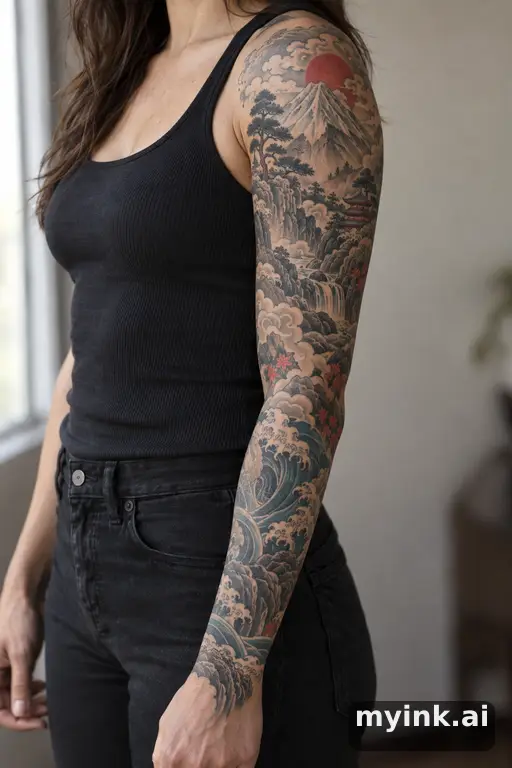
Sleeves — full (wrist to shoulder), three-quarter, or half — are the most popular Japanese tattoo commitment in Western markets. Japanese sleeve tattoos wrap around the arm's curved surface using wave and wind elements as natural connectors. The design must account for how it reads from every viewing angle as the arm rotates.
Chest and Shoulder Panels
Chest panels extending from the clavicle across the pectoral and into the upper arm are a traditional irezumi placement, often forming part of a larger body suit. This area is high in pain due to proximity to the sternum and collarbone but provides an impactful visual statement, especially when paired with a sleeve.
Thigh and Leg Compositions
The thigh offers a large, relatively flat canvas ideal for standalone Japanese compositions — a single koi, dragon, or floral arrangement. Leg pieces from thigh to ankle mirror sleeve conventions and require similar planning to flow naturally around curved muscle groups. The calf tends to be lower pain than the shin, which sits close to bone.
Explore Other Styles
Related Tattoo Ideas
Japanese Tattoo Backgrounds
Pick the background first: wind bars, waves, clouds, sky, landscape or blossoms.
Dragon Tattoo Designs
Explore Japanese dragon tattoo ideas from traditional irezumi to neo-Japanese style.
Flower Tattoo Designs
Discover peonies, chrysanthemums, and sakura in the Japanese tattoo tradition.
Sleeve Tattoo Designs
Plan your Japanese sleeve with full, half, and three-quarter sleeve composition ideas.
Trusted Resources
Tattooing — Wikipedia
Comprehensive encyclopedia article on irezumi history, major stylistic conventions, cultural context, and notable practitioners.
Tattoo Safety — American Academy of Dermatology
Medical guidance on minimizing health risks when getting large, multi-session tattoos including infection prevention and ink safety.
Tattoo Risks and Precautions — Healthline
Evidence-based overview of tattoo health considerations, particularly relevant for extensive work like sleeves and back pieces.
Frequently Asked Questions
How long does a Japanese sleeve tattoo take to complete?
Is it culturally disrespectful for non-Japanese people to get irezumi?
What is the difference between traditional irezumi and Neo-Japanese style?
Can Japanese tattoos be covered up in professional settings?
What should a Japanese tattoo dragon symbolize?
Ready to Design Your Japanese Tattoo?
Preview on skin
Try this on your skin
Upload a photo and see the design placed on your own body before anything is permanent.
Try it on · 1 credit →
Free advisor
Create your own design
Describe one idea and the advisor shapes it into 4 genuinely different directions.
Open the studio — free to start →
The advisor is free. A round of 4 directions costs 4 credits — See plans — 8 free credits to start